Blog 4: My Development as a Future Leader

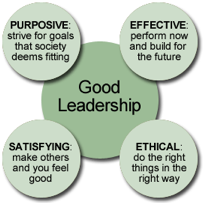
As a graduate student in Coventry University London doing my MBA, I have had the opportunity to know better what it means to be a true leader and also learnt about the many theories of leadership. None of the theories is superior to the other but knowing the business terrain, the people you work with, the business type and the objective of the business can determine what leadership style is appropriate. From this module, I have come to know what leadership style traits I have and although, I am still at the learning stage but it has been great to be able to know my style.
My Leadership Style: Participative or Democratic Style

I have shown a democratic leadership style because I believe everyone in my team should be able to make a decision, be consulted, and their opinions appreciated. The democratic leadership style is an open and shared style of running a team. It is also known as participative leadership, a style of leadership where by members of the team take a more participative role in the decision-making process (Ray and Ray, 2012).
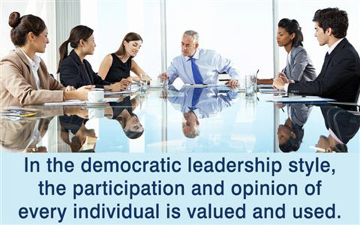
Running a business of my own, democratic leadership style is crucial to my business as I have a team of skilled and creative minds and allowing them to take more participative role in decision-making is a great way to achieve higher productivity, better contributions and increased team morale. I believe in been a facilitator rather than simply issuing orders or commands to my team. The characteristic of a democratic leader includes one who shares decision making with others, a winner of cooperation, a provider of logical consequences, encouraging, approving of self-determination, guiding, a good listener and respecting, and situation-centered (Choi, 2007).

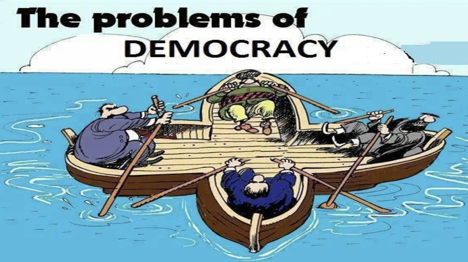
The advantages of democratic leadership comes from increased involvement of the team members. Team members feels included and have a say and hence, job satisfaction is increased, it increases commitment levels, innovation flourish because everyone is able to share ideas, and creates a robust vision (Martin, 2016). This style also has some drawbacks such as loss of speed in decision-making and some team members might find the requirement to participate in decision-making process burdensome (Martin, 2016).
Feedback from my Team Members
Working my team for this module, I have received some feedbacks which are significant to my growth as an individual and for my business. Some positive feedbacks I got ‘ you seek to involve everyone in the group activities rather than concentrate it’, ‘ I love that you ask us to take on responsibilities’, ‘ I like the way you allow everyone share their opinion without criticism’. A team member also said ‘your style is time consuming because you allow for debate and participation of everyone’. All of these feedbacks are essential to my growth and I believe it is part of been great leader. Democratic leadership is associated with public values, freedom, equality, and justice (Choi, 2007), so I believe giving everyone an opportunity to contribute is my way of striving toward equality and freedom.

My Future Development Plan

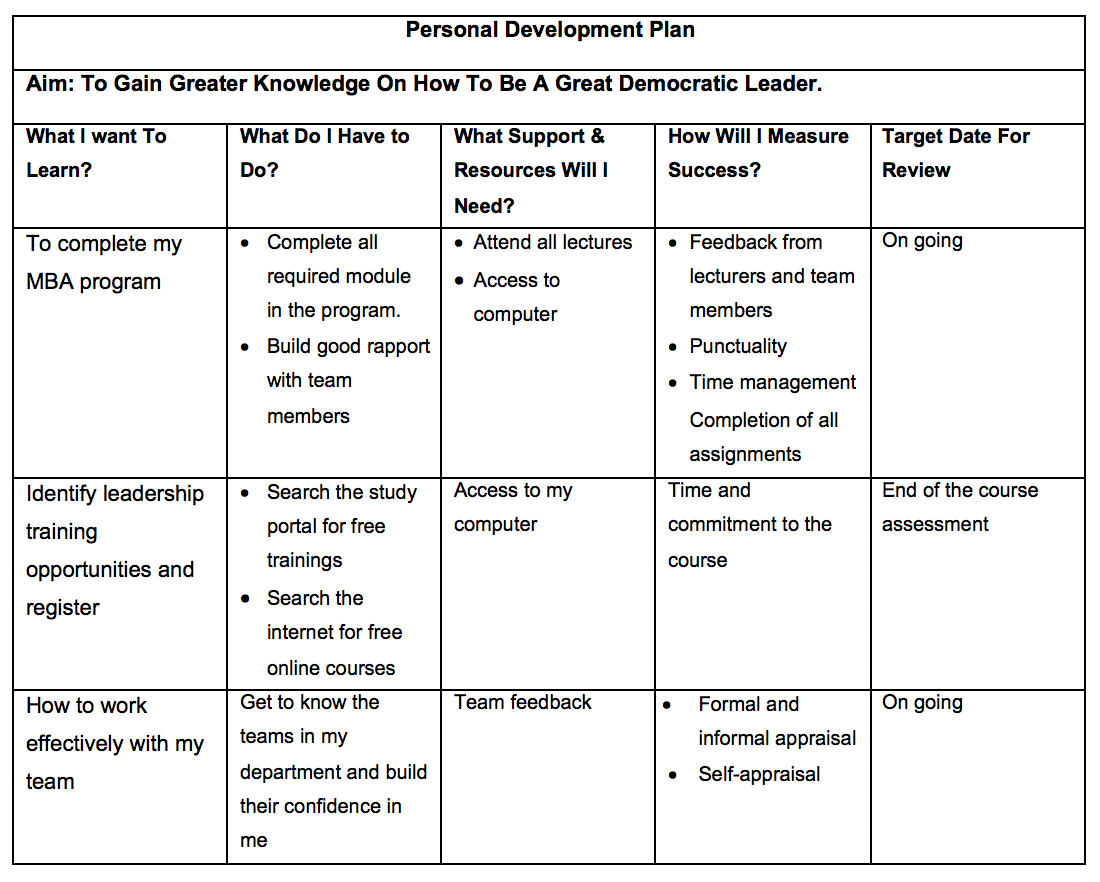
To be a good leader, the qualities and credentials needed are good education, ideas and power. As an MBA student, I have the primal qualification of good education from Coventry University London. I am still at the learning stage, I don’t know it all to effectively function as a good leader but just as John Maxwell said ‘ Leadership is Influence- nothing more, nothing less’. I am determined to influence my team positively in every way possible. For me to influence those around me, I need to grow my sense of self-responsibility, trust and self-confidence. Therefore, applying all the theories I have learnt in this module will help me design the future I need to be an effective and great leader. Below is my personal development plan that will help me achieve my aim to be an effective leader in the future.
Reference

Choi, S. 2007. Democratic Leadership: The Lessons of Exemplary Models for Democratic Governance. International Journal of Leadership Studies, 2(3), pp.243-262.

Martin. 2016. Democratic Leadership Guide: Definition, Qualities, Pros & Cons, Examples. [online] Cleverism. Available at: https://www.cleverism.com/democratic-leadership-guide/ [Accessed 16 Jul. 2019].

Ray, S. and Ray, I. 2012. Understanding Democratic Leadership: Some Key Issues And Perception With Reference To India’s Freedom Movement. Afro Asian Journal of Social Sciences, 3(3.1).

Schrage, M. (2016) ‘Like It or Not, You Are Always Leading by Example’ Harvard Business Review [online] October 05, 2016. Available from < https://hbr.org/2016/10/like-it-or-not-you-are-always-leading-by-example&gt;  [20 Jul. 2019]

Blog 3: Change Management

Introduction

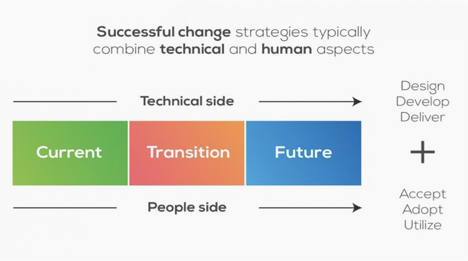
Change management is a systematic approach to dealing with the transition or transformation of an organisation’s goals, processes or technologies (Rouse, 2019). The main aim of change management is to implement strategies for effecting change, controlling change and helping people to adapt to change. However, it is actually the employees who have to ultimately change how they do their jobs. If they fail in their personal transitions, if they don’t embrace and learn a new way of doing things, the imitative will fail. But if the employees embrace and adopt changes required by the initiative, it will deliver the expected outcomes (Prosci, 2019).  

Brexit 

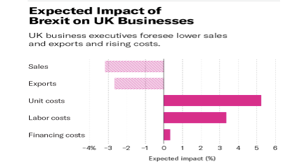
Brexit is essentially a political and economic shock and was largely unexpected.  There are many unknown factors that are difficult for businesses to quantify (Bloom et al., 2019).  The impact of Brexit on British businesses will be a daunting one. According to World Finance, the automotive, airline, pharmaceutical and financial services industries are likely to suffer the most (Worldfinance, 2019). Businesses expect Brexit to affect their sales, exports and costs. On average, businesses expect Brexit to eventually reduce their sales by around 3%. The effects on exports were also expected to be negative, while unit costs, labor costs, and financing costs were expected to increase (Bloom et al., 2019).

(Bloom et al., 2019)

Impact of Brexit on EasyJet PLC

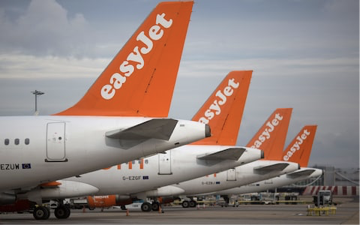
EasyJet is a UK based low budget airline based at London Luton airport. The organisation operates international schedule services to 21 Member States on over 1216 routes (Cassar, 2017). The pre-tax profits of the organisation fell by 28% (EasyJet 2018). The airline profit warning for June 2016 prompted by economic uncertainty, excess airline capacity and air traffic disruption, which sent the organisation’s shares down sharply.

In the Financial Times 2016 report, the chief executive Carolyn McCall insisted the current tough conditions represented an opportunity for the airline to build and strengthen its market position (Wright, 2016). However, this has not been the case, as the 2019 report shows that the airline lost £275m pre-tax in the first half of the years and 9.7% of its shares (Spero, 2019).

Solution to the Problem

For EasyJet to breakeven, the organisation needs to leverage on some of its strong positions at some of Europe’s most attractive airports. The organisation can continue to sustain its strong financial position by attracting more passengers at its other European airport where it has a strong presence. The airline is planning to shift its pilots based in mainland Europe to Austrian and German licenses (Topham and Sweney, 2019). This is a good effort to minimise the potential fall-out from a no deal Brexit. All its affected pilots will be moved to licenses issued by Austria and German crew will be registered locally, while British pilots operating in the UK won’t change (Katz, 2018). Although this solution will incur a limited cost per pilot but working without continued regulatory cooperation might result in mass groundings of its planes.

Action plan

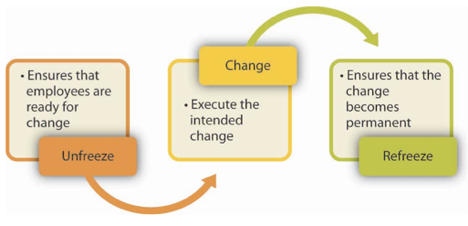
A good change management strategy for EasyJet to apply at these trying times is the Lewin’s Change Management Model. This model is particular easy, practical and will allow the organisation to move towards a new, desired level of behaviour. The model follows a three step process:

Unfreeze: The CEO of EasyJet needs to first change the existing situation to allow for strains of individual resistance and group conformity to be overcome. The CEO needs to motivate the employees by preparing them for change, build trust and recognition for the need to change and actively participate in recognising problems and brainstorming solutions within the group (Kritsonis, 2005).

Lewin’s Three-Stage Process of Change

Change: The CEO needs to convince the employees that it is necessary to move the target system to a new level of equilibrium (Kritsonis, 2005). The employees need to know how Brexit will impact the airline services and encourage them to agree to a new fresh perspective, work together on a quest for new, relevant information and connect their views and opinions on how to change the situation. 

Refreeze: Once the new change has been implemented, there is a need to stabilise the new equilibrium resulting from the change by balancing both the driving and restraining forces (Kritsonis, 2005). EasyJet needs to reinforce new patterns and institutionalise them through formal and informal mechanisms including policies and procedures.

Learning Outcomes

For successful change to occur at EasyJet following the impact of Brexit, the change initiatives must start at the top. The CEO must be fully invested in championing a burning platform to create a strong sense of urgency. The CEO must consider how the adjustment or replacement will impact the processes, systems and employees of EasyJet. Lewin’s Change Management Model is suitable for EasyJet to combat the impact of Brexit because it steps pushes employees in the desired direction for change 

Reference 

Bloom, N., Bunn, P., Chen, S., Mizen, P., Smietanka, P., & Thwaites, G. (2019). Brexit Is Already Affecting UK Businesses — Here’s How. Available at: https://hbr.org/2019/03/brexit-is-already-affecting-uk-businesses-heres-how [Accessed 19 Jul. 2019].

Cassar, R. (2017). Survival Of The Freest: The Impact Of Brexit On EasyJet P.L.C.

Katz, B. (2018). EasyJet Moves Pilots to New Licenses to Hedge Brexit Risk. Available at: https://skift.com/2018/08/31/easyjet-moves-pilots-to-new-licenses-to-hedge-brexit-risk/ [Accessed 19 Jul. 2019].

Kritsonis, A. (2005). Comparison of Change Theories. International Journal Of Management, Business, And Administration, 8(1).

Prosci.com. (2019). What is Change Management?. Available at: https://www.prosci.com/resources/articles/what-is-change-management [Accessed 20 Jul. 2019].

Rouse, M. (2019). What is change management?. Available at: https://searchcio.techtarget.com/definition/change-management [Accessed 20 Jul. 2019].

Spero, J. (2019). EasyJet warns on impact of Brexit uncertainty | Financial Times. Retrieved from https://www.ft.com/content/8df9ac40-5447-11e9-a3db-1fe89bedc16e [Accessed 21 Jul. 2019].

Topham, G. and Sweney, M. (2019). EasyJet to set up Austrian HQ to operate EU flights after Brexit. [online] the Guardian. Available at: https://www.theguardian.com/business/2017/jul/14/easyjet-austria-eu-flights-brexit [Accessed 21 Jul. 2019].

Blog 2: Contemporary Leadership Styles: How relevant are they in today’s changing world?

Introduction 

Source:  (Miller, 2019)

A leader is an individual who influences a group of people towards the achievement of a goal (Wong, 2007). This definition represents person, people and purpose. A good leader must be honest, have the ability to delegate, sense of humor, confident, committed, positive, and creative (Center for Creative Leadership, 2019). According to Hao and Yazdanifard (2015), Leadership is a type of power where an individual has the ability to influence or change the values, beliefs, behaviour and attitudes of another person. An individual with strong leadership ability will be a good example or role model to the people he/she leads, because a leader who is able to effectively achieve some good result or achievement gains the trust and admiration of their employees. In today’s organisation, an effective leader who understands the complexities of the rapidly changing global environment is required.

Leadership Styles 

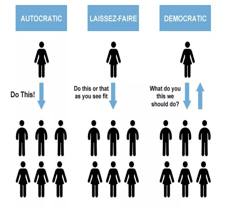
All leaders do not possess the same attitude or perspective but a perfect leadership style one which assists a leader in getting the best out of the people who follow him. Classic leadership style according to Kurt Lewin is autocratic, democratic and Laissez-faire. An autocratic leadership is when a leader is faced with the need to provide a decision; he/she is one who would come with a solution for the entire group on their own. Democratic leaders are those who took a very relaxed yet in control approach to leading the group. Laissez-faire leaders use the idea that the participants should be able to work problems out and make their way through an expedition without too much extra guidance. These types of leaders provide very little guidance when dealing with group issues and would allow employees to come up with decisions on their own (Val & Kemp, 2012).

Classic Leadership Styles, (Anastasia, 2017)

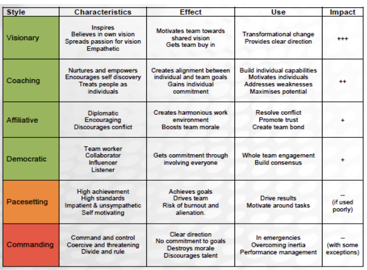
Daniel Goleman did a research and found that leaders use six styles of leadership. Each of the style springs from different components of emotional intelligence (Thuijsman, 2015). Provided below is the explanation of each of the leadership styles. None of the six styles are right or wrong, each has a time and place where it is appropriate depending on the specific context (The Da Vinci Institute, 2013). 

Goleman’s Leadership Styles (The Da Vinci Institute, 2013)

Contemporary leadership styles are the most recent developments in leadership styles. Below are some examples of contemporary leadership styles:

  • Transactional leadership: is a style that is based on the setting of clear goals and aims for the employees as well as the use of either penalties or rewards in order to encourage compliance with these goals (Thuijsman, 2015). It is action-oriented and focused on achieving predetermined goals.
  • Transformational leadership: is a style that focuses on the development of employees as well as their needs. The leader that uses this style focuses on the growth and development of value system of employees, their inspirational level and principles with the preamble of their capabilities (Nanjundeswaraswamy & Swamy, 2014). A transformational leader has charisma, considerate, inspirational, and intellectual stimulates is followers (Mahomed, 2016).
  • Situational leadership: this style is underlined by the concept that there is no one most effective, and that a leader adapt their leadership style to suit the task, people or project at hand. It has four interchangeable leadership styles which are; telling, selling, participating and delegating (HRZone, 2019).

Dangote Industries Limited

Dangote Industries Limited is a company founded in 1981 by Aliko Dangote to supply commodities such as cement, sugar, salt, pasta, noodles, rice, fabric etc. it is the largest indigenous industrial conglomerate in Sub Saharan Africa (Dangote.com, 2019). The company is striving for self-reliance in Nigeria in all sectors where it operates and has drawn up ambitious plans to set up world-class projects in new realms such as petroleum refinery and petrochemicals, fertiliser, gas pipeline, and energy (Dangote.com, 2019). Aliko Dangote’s leadership style can be classified as transformational leadership. 

Some products of Dangote (Alao, 2018)

As a transformational leader, Dangote has created vision and ensured that the vision is translated into reality, which can be seen in the growth of the company all over Sub Saharan Africa. Transformational leaders have three main qualities which are self-confident, paying attention to their employees and arousing in their employees an awareness of problems and potential solutions (Charles, 2012).  These qualities can be found in Dangote leadership style. As a self-confident leader, Dangote through persistence and hardwork launched the new cement plants in Cameroon, Ethiopia, Zambia and Tanzania despite the rate of poverty in Nigeria (Lanre, 2017). To solve the issue of unemployment in Nigeria, Dangote promised to create 210.000 jobs between 2016 and 2018 with 80% coming from agricultural sector. He has the vision and the vision has been turned into reality with the company partnering with out-growers to cultivate and grow rice paddy and sugarcane (Dangote, 2019). The company is building rice processing mills in Kano, Jigawa, Sokoto, Zamfara, Kebbi and Niger states to reduce rice import to nearly zero in Nigeria (Africanglobe.net, 2018). The leadership style of Dangote have allowed the company to grow in Nigeria and expanding to other Sub Saharan African countries as an example of a true African capitalism representing the new and innovative style of doing business in Africa (White and Rees 2018). 

Conclusion

Aliko Dangote style of leadership should be  based on the terrain of the country,  the purpose of the organisation in terms of objectives, task, people or project. There is no size fits all leadership style. In the future, leaders should develop their leadership style based on the objectives and how to drive the objectives of the organisation and also promote employee engagement. 

Reference

Africanglobe.net (2018). Aliko Dangote Pumping Billions Into Agriculture. [online] Africanglobe.net. Available at: https://www.africanglobe.net/business/aliko-dangote-pumping-billions-agriculture/  [Accessed 26 Jun. 2019]. 

Alao, V. (2018). What You Should Know About Dangote Group – Vision, Projects, Achievements and Businesses. [online] eeSPACE. Available at: http://eespace.com.ng/what-you-should-know-about-dangote-group-vision-projects-achievements-and-businesses/  [Accessed 26 Jun. 2019].

Anastasia. (2017). Laissez Faire Leadership Guide: Definition, Qualities, Pros & Cons, Example. Available at https://www.cleverism.com/laissez-faire-leadership-guide/ [Accessed 26 Jun. 2019].

Center for Creative Leadership. (2019). What Are the Characteristics of a Good Leader?. Available at https://www.ccl.org/blog/characteristics-good-leader/ [Accessed 27 Jun. 2019]

Charles, E. (2012). The Role of Managerial Leadership in Corporate Goal Attainment (A Case Study of Dangote Flour Mills Plc.). Masters in Business Management- University of Nigeria.

Dangote.com (2019). About Us – Dangote Industries Limited. [online] Dangote.com. Available at: https://dangote.com/about-us/  [Accessed 28 Jun. 2019].

Hao, M., & Yazdanifard, R. (2015). How Effective Leadership can Facilitate Change in Organizations through Improvement and Innovation. Global Journal Of Management And Business Research: A Administration And Management, 15(9).

HRZone. (2019). What is Situational Leadership?. [online] Available at: https://www.hrzone.com/hr-glossary/what-is-situational-leadership  [Accessed 2 Jul. 2019].

Lanre, S. (2017). Uncovering Leadership Styles. Walden University.

Be Leaderly. (2019). Emerging Leader Spotlight: Megan Upp – Be Leaderly. [online] Available at: https://beleaderly.com/megan-upp/  [Accessed 4 Jul. 2019].

Mahomed, Y. (2016). The impact of different leadership styles on employee engagement in an organisation undergoing change (Doctoral dissertation, University of Pretoria).

Nanjundeswaraswamy, T. S., & Swamy, D. R. (2014). Leadership styles. Advances in management, 7(2), 57.

The Da Vinci Institute. (2013). Goleman’s Six Leadership Styles. Retrieved from http://dmcodyssey.org/wp-content/uploads/2013/08/Goleman%E2%80%99s-Six-Leadership-Styles.pdf [Accessed 5 Jul. 2019].

Thuijsman, T. (2015). Leadership styles and their influence on employees regarding the acceptance of organizational change. Bachelor Thesis Conference.

Val, C., & Kemp, J. (2012). Leadership Styles. Pathways: the Ontario journal of outdoor education, 24(3), 28-31.

White, L., & Rees, L. (2018). Dangote’s expansion: driving African capitalism. Emerald Emerging Markets Case Studies, 8(2), 1-25.

Wong, A. (2007). Definition of a Leader. Retrieved from http://www.vtaide.com/gleanings/leader.html [Accessed 5 Jul. 2019].

Can cultures be managed within organisations?

Can cultures be managed within organisations?

The culture of an organisation highly influences its numerous decisions and actions. An organisation’s fundamental ideas, values, attitudes, and views guide the way in which the employees think, feel and act unconsciously (Tharp, 2009). Hence understanding culture is fundamental to the description and investigation of the organisational culture. For this blog post, I will be discussing the organisational culture of Jaguar automobile


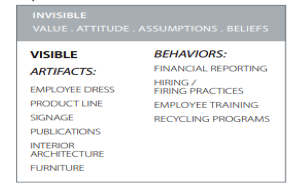
Aspect of Culture (Tharp, 2009)

According to the aspect of culture above, the invisible represents the basic underlying assumptions and the visible part represents the observable artefacts on the Schein’s levels of culture (Schein, 2010). Artefacts are the physical and socially constructed environment of the organisation while basic assumptions guides the employees’ perception, feelings and emotions about the things in the organisation (Manetje, 2009). An organisation’s culture impacts every aspect of how the organisation functions and how work is done (Chartered Institute of Personnel And Development, 2011). In the bid for sustainable performance, ensuring the culture is fit for future is the main concern for many organisations. An organisation’s culture is central to its success rather than factors such as structure, approach or policy. Organisational culture can be defined as a system of shared meaning held by members, differentiating the organisation from other organisations (Manetje, 2009). An organisation’s culture can be considered a strong culture if the core values are held strongly and shared widely by all employees (Manetje, 2009).  Zappos, Southwest Airlines, Twitter, Chevron, and Google are among the organisations known for their strong organisational culture (Patel, 2015). Weak culture is when organisational members do not subscribe to the shared beliefs, values and norms (Manetje, 2009). Companies like Amazon, Jaguar, Kraft Heinz Company, and Xerox are some of the organisations with weak organisational culture. 

In this blog post, different theories and model will be used to explain, understand and implement strategies to manage culture of a real life organisation.

Culture at Jaguar 

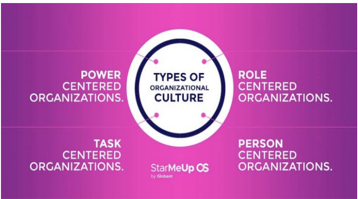
The first Jaguar car was produced in 1935 by Sir William Lyons. The company produces a range of cars that are agile, powerful, smooth, seductive, confident, and instinctive (Jaguar.Ca, 2019). The organisation generates thousands of jobs while pursuing automotive superiority and quality in the UK and around the world. The organisation remains at the forefront of the luxury automotive industry.  According to the types of organisational culture, Jaguar possesses a combination of role culture and task centred culture. Role culture of Jaguar is that of hierarchical and bureaucracies. Jaguar puts its strengths in the pillars, roles and areas of expertise of the organisation. At Jaguar, task centred approach is organised in a way that top values are teamwork and collaboration, focused on the fulfilment of objectives (Handy, 1993). Can this organisational culture be considered a strong culture?

Charles Handy Model (StarMeUp, 2018)

Challenges in the Automobile Industry

Jaguar was founded by a British car maker, Ford Halewood. The organisation uses just-in-time principles to ensure that production materials are received, where and when needed in the right quantities (Addy, 2013). Employees knew precisely what was expected of them and where allotted a timeline to carry out a particular operation. The organisation culture lacks respect from the top management and downward. According to one of the employee’s, they were asked to leave their brain outside the gate.  In Jaguar, culture change is required to reclaim the reputation of the brand, as they face industrial action after union rejected the automobile’s pay offer of 14% over a three years period.  The employees are angered by pension cuts and a pay offer that falls short in recognising their role in the success of the organisation (Financial Times, 2014).

Implementation of Culture Change in Jaguar

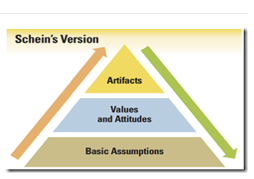
According to Edgar Schein, organisations do not adopt a culture change in a single day, rather it is a journey as the employees go through various changes, familiarise to the external environment and solve problems (Juneja, 2019).

Edgar Schein Model (Premier Developer, 2019)

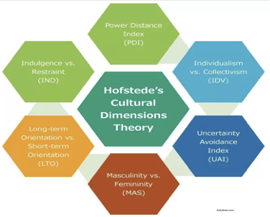
Change is multifaceted and there is no quick fix but there must be unrelenting support from all variables in that change by continuously managing the process. To implement organisational culture change in Jaguar, the Hofstede’s cultural dimensions model will be applied. There are six dimensions on the model, the power distance and individualism will be applied.  By lowering the power distance in the organisation, that employees will be empowered to be creative (Juneja, 2019). This will also establsih excellent practices across the organisation which will act as a standard for improving performance in the organisation. Individualism is needed in Jaguar so that employees with common interest can come together and work in unity as a team (Juneja, 2019). In such a setup, the employees share a healthy relationship and take each other’s opinion and help when required.

Hofstede’s Cultural Dimension Model (iEduNote.com, 2017)

Charter Statement

I believe an organisation such as Jaguar should implement a little power distance and also individualism. High level of individualism means the organisation has a high level of creativity. Little power distance and individualism are well suited for Jaguar and can both can be integrated very easily. Power distance in automobile industry is not so important but individualism is important since all employees are expected to carry their own responsibilities.

References

LLP, B. (2019). Changes in the car industry – Changing the culture at Jaguar – Jaguar | Jaguar case studies and information | Business Case Studies. [online] 

Businesscasestudies.co.uk. Available at: http://businesscasestudies.co.uk/jaguar/changing-the-culture-at-jaguar/changes-in-the-car-industry.html  [Accessed 27 May. 2019].

Chartered Institute of Personnel and Development. (2011). Developing organisation culture Six case studies. Available at https://www.cipd.co.uk/Images/developing-organisation-culture_2011-six-case-studies_tcm18-10885.pdf [Accessed 2 Jun. 2019].

Financial Times. (2014). Jaguar Land Rover workers threaten industrial action. Retrieved from https://www.ft.com/content/f5b1952a-6bec-11e4-b939-00144feabdc0 [Accessed 2 Jun. 2019]

iEduNote.com. (2017). Hofstede’s Cultural Dimensions Theory. Available at https://iedunote.com/hofstedes-cultural-dimensions-theory [Accessed 2 Jun. 2019].

JAGUAR. (2019). Cultures and Values. Available at https://www.jaguarlandrovercareers.com/content/Cultures-and-Values/?locale=en_GB [Accessed 2 Jun. 2019].

Jaguar Land Rover workers threaten industrial action | Financial Times. [online] Available at: https://www.ft.com/content/f5b1952a-6bec-11e4-b939-00144feabdc0 [Accessed 3 Jul. 2019].

Jaguar. Ca. (2019). Jaguar’s Innovative Leadership Team. Available at https://www.jaguar.ca/en/about-jaguar/jaguar-business/index.html [Accessed 2 Jun. 2019].

Juneja, P. (2019). Edgar Schein Model of Organization Culture. Available at https://www.managementstudyguide.com/edgar-schein-model.htm [Accessed 2 Jun. 2019].

Manetje, O. M. (2009). The Impact of Organisational Culture on Organisational Commitment (Doctoral dissertation).

Patel, S. (2015). 10 Examples of Companies with Fantastic Cultures. Available at https://www.entrepreneur.com/article/249174 [Accessed 2 Jun. 2019].

Premier Developer. (2019). DevOps and Culture, part 2. Available at https://devblogs.microsoft.com/premier-developer/devops-and-culture-part-2/ [Accessed 30 May. 2019].

StarMeUp. (2018). Organizational Culture: Strengthen your Company’s Foundations with Unified Values ⋆ StarMeUp. Available at https://www.starmeup.com/blog/en/culture-and-values/organizational-culture/ [Accessed 30 May. 2019].

Tharp, B. M. (2009). Defining “culture” and “organizational culture”: From anthropology to the office. Interpretation a Journal of Bible and Theology, Harworth.