Can cultures be managed within organisations?
The culture of an organisation highly influences its numerous decisions and actions. An organisation’s fundamental ideas, values, attitudes, and views guide the way in which the employees think, feel and act unconsciously (Tharp, 2009). Hence understanding culture is fundamental to the description and investigation of the organisational culture. For this blog post, I will be discussing the organisational culture of Jaguar automobile
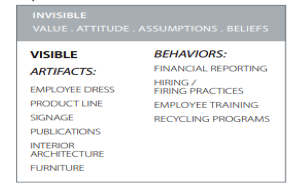
According to the aspect of culture above, the invisible represents the basic underlying assumptions and the visible part represents the observable artefacts on the Schein’s levels of culture (Schein, 2010). Artefacts are the physical and socially constructed environment of the organisation while basic assumptions guides the employees’ perception, feelings and emotions about the things in the organisation (Manetje, 2009). An organisation’s culture impacts every aspect of how the organisation functions and how work is done (Chartered Institute of Personnel And Development, 2011). In the bid for sustainable performance, ensuring the culture is fit for future is the main concern for many organisations. An organisation’s culture is central to its success rather than factors such as structure, approach or policy. Organisational culture can be defined as a system of shared meaning held by members, differentiating the organisation from other organisations (Manetje, 2009). An organisation’s culture can be considered a strong culture if the core values are held strongly and shared widely by all employees (Manetje, 2009). Zappos, Southwest Airlines, Twitter, Chevron, and Google are among the organisations known for their strong organisational culture (Patel, 2015). Weak culture is when organisational members do not subscribe to the shared beliefs, values and norms (Manetje, 2009). Companies like Amazon, Jaguar, Kraft Heinz Company, and Xerox are some of the organisations with weak organisational culture.
In this blog post, different theories and model will be used to explain, understand and implement strategies to manage culture of a real life organisation.
Culture at Jaguar
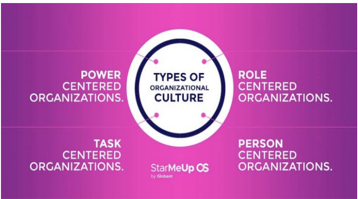
The first Jaguar car was produced in 1935 by Sir William Lyons. The company produces a range of cars that are agile, powerful, smooth, seductive, confident, and instinctive (Jaguar.Ca, 2019). The organisation generates thousands of jobs while pursuing automotive superiority and quality in the UK and around the world. The organisation remains at the forefront of the luxury automotive industry. According to the types of organisational culture, Jaguar possesses a combination of role culture and task centred culture. Role culture of Jaguar is that of hierarchical and bureaucracies. Jaguar puts its strengths in the pillars, roles and areas of expertise of the organisation. At Jaguar, task centred approach is organised in a way that top values are teamwork and collaboration, focused on the fulfilment of objectives (Handy, 1993). Can this organisational culture be considered a strong culture?
Challenges in the Automobile Industry
Jaguar was founded by a British car maker, Ford Halewood. The organisation uses just-in-time principles to ensure that production materials are received, where and when needed in the right quantities (Addy, 2013). Employees knew precisely what was expected of them and where allotted a timeline to carry out a particular operation. The organisation culture lacks respect from the top management and downward. According to one of the employee’s, they were asked to leave their brain outside the gate. In Jaguar, culture change is required to reclaim the reputation of the brand, as they face industrial action after union rejected the automobile’s pay offer of 14% over a three years period. The employees are angered by pension cuts and a pay offer that falls short in recognising their role in the success of the organisation (Financial Times, 2014).
Implementation of Culture Change in Jaguar
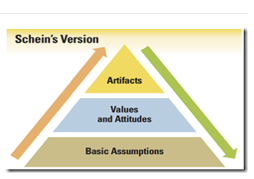
According to Edgar Schein, organisations do not adopt a culture change in a single day, rather it is a journey as the employees go through various changes, familiarise to the external environment and solve problems (Juneja, 2019).
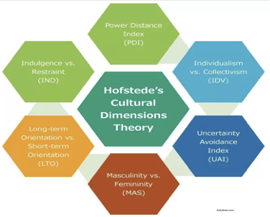
Change is multifaceted and there is no quick fix but there must be unrelenting support from all variables in that change by continuously managing the process. To implement organisational culture change in Jaguar, the Hofstede’s cultural dimensions model will be applied. There are six dimensions on the model, the power distance and individualism will be applied. By lowering the power distance in the organisation, that employees will be empowered to be creative (Juneja, 2019). This will also establsih excellent practices across the organisation which will act as a standard for improving performance in the organisation. Individualism is needed in Jaguar so that employees with common interest can come together and work in unity as a team (Juneja, 2019). In such a setup, the employees share a healthy relationship and take each other’s opinion and help when required.
Charter Statement
I believe an organisation such as Jaguar should implement a little power distance and also individualism. High level of individualism means the organisation has a high level of creativity. Little power distance and individualism are well suited for Jaguar and can both can be integrated very easily. Power distance in automobile industry is not so important but individualism is important since all employees are expected to carry their own responsibilities.
References
LLP, B. (2019). Changes in the car industry – Changing the culture at Jaguar – Jaguar | Jaguar case studies and information | Business Case Studies. [online]
Businesscasestudies.co.uk. Available at: http://businesscasestudies.co.uk/jaguar/changing-the-culture-at-jaguar/changes-in-the-car-industry.html [Accessed 27 May. 2019].
Chartered Institute of Personnel and Development. (2011). Developing organisation culture Six case studies. Available at https://www.cipd.co.uk/Images/developing-organisation-culture_2011-six-case-studies_tcm18-10885.pdf [Accessed 2 Jun. 2019].
Financial Times. (2014). Jaguar Land Rover workers threaten industrial action. Retrieved from https://www.ft.com/content/f5b1952a-6bec-11e4-b939-00144feabdc0 [Accessed 2 Jun. 2019]
iEduNote.com. (2017). Hofstede’s Cultural Dimensions Theory. Available at https://iedunote.com/hofstedes-cultural-dimensions-theory [Accessed 2 Jun. 2019].
JAGUAR. (2019). Cultures and Values. Available at https://www.jaguarlandrovercareers.com/content/Cultures-and-Values/?locale=en_GB [Accessed 2 Jun. 2019].
Jaguar Land Rover workers threaten industrial action | Financial Times. [online] Available at: https://www.ft.com/content/f5b1952a-6bec-11e4-b939-00144feabdc0 [Accessed 3 Jul. 2019].
Jaguar. Ca. (2019). Jaguar’s Innovative Leadership Team. Available at https://www.jaguar.ca/en/about-jaguar/jaguar-business/index.html [Accessed 2 Jun. 2019].
Juneja, P. (2019). Edgar Schein Model of Organization Culture. Available at https://www.managementstudyguide.com/edgar-schein-model.htm [Accessed 2 Jun. 2019].
Manetje, O. M. (2009). The Impact of Organisational Culture on Organisational Commitment (Doctoral dissertation).
Patel, S. (2015). 10 Examples of Companies with Fantastic Cultures. Available at https://www.entrepreneur.com/article/249174 [Accessed 2 Jun. 2019].
Premier Developer. (2019). DevOps and Culture, part 2. Available at https://devblogs.microsoft.com/premier-developer/devops-and-culture-part-2/ [Accessed 30 May. 2019].
StarMeUp. (2018). Organizational Culture: Strengthen your Company’s Foundations with Unified Values ⋆ StarMeUp. Available at https://www.starmeup.com/blog/en/culture-and-values/organizational-culture/ [Accessed 30 May. 2019].
Tharp, B. M. (2009). Defining “culture” and “organizational culture”: From anthropology to the office. Interpretation a Journal of Bible and Theology, Harworth.

 Egbe Peter's Blog
Nice research. I have to ask though,if as an employee I disagree with the culture in a company I work for am I then to conform, act out or quit in order avoid disrupting the organization culture? If my thoughts are not being heard of course
LikeLike
Thanks. To answer your question, you need to know that companies benefits a lot when employees speak up bringing suggestions. Before talking to your employer about the problem, you should ask yourself how the culture differs from what you were expecting. Get close to your colleagues, it is quite normal to feel a bit uncomfortable for the first few months. Ask your boss to give feedback on how you have been working so far. Give it some time after talking to your employer as you don’t expect the Organisation’s culture to change overnight.
After all been said and done and there seems to be no positive change, then you might want to start a new job search as you deserve to work in a culture that’s conducive to your success and happiness. Make sure you let your boss know as your feedback will help improve the company
LikeLike
Insightful.
LikeLike
Thanks a Ruth, Don’t forget to check all the blogs I have posted
LikeLike